
On The Record with Jeffrey Reed
June 27, 2026
My Top-10 All-Time Local Sports Interviewees

As I approach my 48th year interviewing members of the London sports community for print, broadcast and new media, I could very easily assemble a large list of assholes I’ve encountered from every sport played on a pitch, rink, diamond, course and field. The late Bum Phillips, while coaching the Houston Oilers, once quipped, “Sportswriters are like diapers. You change them for the same reason.” It’s true, we scribes do work in a transient industry, and many of the coaches and players we interview think we’re full of shit. But as I approach a half century of writing and speaking about sports, I’m proud of the fact I’m still going strong, mostly unscathed and always searching for the truth.
Most importantly, I’m proud that I have forged more solid relationships with sports personalities than I have made enemies. In fact, if you had asked Bum – or any other coach or player who has sparred with sportswriters – then they’re likely to admit they have, for the most part, enjoyed the verbal battles they’ve engaged in with the media. They know it’s part of the game, and we know we’re just doing our jobs. If we didn’t, then the sports world would be one big Instagram clusterfuck.
For me, working each day, writing and talking about sports and digging deeply into the inside stories, has never been about punching a clock. I’ve had plenty of opportunities to join the staffs of daily newspapers, monthly magazines, as well as radio and television newsrooms. But freelancing is what gets me out of bed in the morning. It’s not what I do; rather, it’s who I am. It’s a decision I made a long time ago. I owe a lot of that to long-time London-based writer Herman Goodden, who, during the mid-1980s, encouraged me and inspired me to follow my own dreams through freelance journalism.
If you are a reader of, On The Record with Jeffrey Reed, then you know that in 1981 I conducted my first lengthy, feature interview with none other than Wayne Gretzky – that was a hell of a way to break into the industry. And while I have interviewed thousands of amateur and professional athletes across Canada and the U.S., my passion has always been local sports. Credible local sports journalists, sadly, are a dying breed, which makes my mission even more important – in particular, when it relates to local sports history. Few people care about history of any type anymore, and that is a tragedy.
So, when I assembled my Top 10 list of local sports interviewees – a list which, by the way, came together in just a few minutes – I first thought to myself, many of my readers won’t recognize all of the names on this list. Even more reason to include them, as they all are or were larger than life.
What determined who made this list of top interviewees? They had to be accessible, credible in their own right, always ready with an entertaining quote, avoiding cliches but instead offering deep insight – passion, if you will – when talking about their own sport. Some on this list are outrageous; others spoke like scholars. Yet they all were a reporter’s dream, providing quips which jumped off the page and grabbed listeners by the collar. After all, sports is entertainment – and all of the people on this list are or were entertainers, first and foremost.
In all honesty, the majority of local coaches and athletes I’ve interviewed for parts of five decades have boasted as much personality as a piece of dry toast. Every good sports journalist would say the same. It’s par for the course. And like every good sportswriter, it has been my job to write entertaining stories, despite that fact.
Without further adieu, here are my Top 10 Local Sports Interviewees – all of whom were anything but dry toast. Enjoy.
1. Harry Gauss, London City Soccer Club


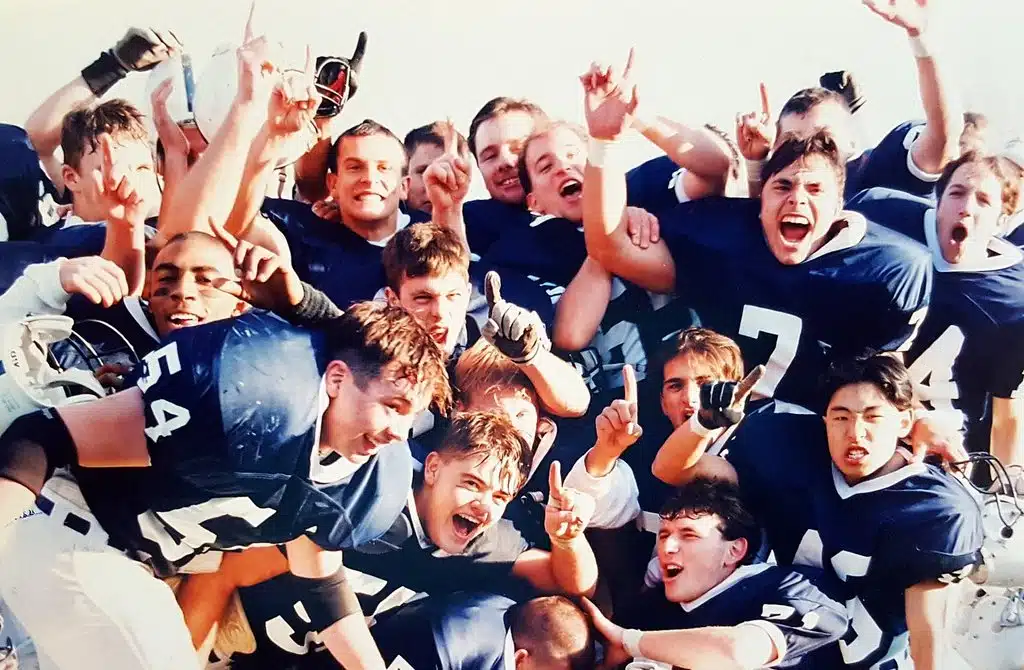
Harry Gauss (top row, far right) and early-1970s London City Soccer Club
For more than three decades, from the early-1970s until his death at age 57 in 2009, Harry Paul Gauss was soccer in London. Born in Germany, Harry and his father, Markus “Max” Gauss, founded London City Soccer Club on Valentine’s Day 1973. Harry played for the National Soccer League’s London German Canadians in 1971 and ’72 before helping Max launch London City, which played out of Cove Road Field at the German Canadian Club until 2011. He played almost every role with that club – owner, coach, manager, player, game day operations manager, media relations director, etc. London City and Harry Gauss were inseparable, and Harry was the heartbeat of local soccer, long before FC London established local roots.
I first met Harry in 1989 when he was coaching the Fanshawe Falcons men’s and women’s soccer teams, and I was operating the college’s publications department and working as editor of the school newspaper, The Interrobang. A faculty strike had stripped me of my 60-plus student volunteers and I had no time to cover Falcons soccer. One morning, Harry stormed into my office and asked me, “Do you not like soccer?” After a two-hour gab over coffee, we forged what would become a long friendship. During the early-1990s, I assisted Harry with London City photography and some television play-by-play.
Before I met Harry, I had very little interest in soccer, but who could refuse Harry Gauss? He was brutally honest with his opinions, feverishly passionate about soccer and London City, and, above all, loyal to anyone he respected. Any time I needed a comment or quote related to a soccer piece I was writing, Harry would always make himself available. Always. He would drop what he was doing and give me the goods. Harry was knowledgeable, insightful and wise in all-things soccer. I always spoke my mind about a variety of things – we spoke more about life than soccer – and Harry always respected me for that.
In 2006, Harry was diagnosed with brain cancer, and died three years later after complications from surgery. Upon his death, his sons Ryan and Sean ran London City until their sale of the club in late 2011. There will never be another Harry Gauss, nor will there ever be a local sports personality as passionate about their sport as Harry was about the game of soccer. Let me add, whenever I took London City team photos, Harry refused to be in the photo. He may have had Harold Ballard’s gift of the gab, but he was the anti-Ballard when it came to humility.
2. John Kuhn, London Werewolves Baseball Club

John Kuhn. Photo: Jeffrey Reed/LondonOntarioSports.com.
For my money, there has never been a louder, more outrageous, more outlandish (for conservative London, anyways) local sports personality than London Werewolves president and general manager John Kuhn. If P.T. Barnum and Tony Robbins had a baby, it would be Kuhn. The Werewolves of the independent Frontier League played at Labatt Park for only three seasons 1999-2001, but in the history of the game at the world’s oldest, continuous baseball grounds, no team brought as much fun to the corner of Wilson and Riverside than the Werewolves. From the moment he arrived in the Forest City, Kuhn worked non-stop to promote the ballclub. For big C conservative London, he was a bull in a china shop. But for me, writing and talking about baseball, he was a breath of fresh air. He called me multiple times each week with story ideas – and many times complained about my absence (to my defence, I was coaching and pitching with the London Majors of the Intercounty Baseball League in 2000 and ’01). A long-time minor league baseball front office employee and executive, Kuhn leaned on mentors including Mike Veeck, former marketing director for the Tampa Bay Rays, part owner of a string of minor league franchises and son of the game’s greatest promoter, Bill Veeck of the Chicago White Sox. Who could forget the constant playing of, Werewolves of London, over the Labatt Park PA system, and the team mascot, cleverly named, Warren Z. Vaughn (Warren Zevon recorded that song). To many, Kuhn was a loud-mouthed bully and an outsider. But to me, he was just what sleepy London needed to wake up its sports community. He was a reporter’s dream, always with a pocket full of quips and a deep love plus knowledge of the game. Most of all, he respected baseball – and he respected the media, no matter what they wrote or said about him. After all, he was a showman. I wrote about the Werewolves on the 20th anniversary of their Frontier League championship season – you can read that column here.
3. Glenn Johnston, Fanshawe Falcons Men’s Basketball

Glenn Johnston. Photo: Jeffrey Reed/LondonOntarioSports.com.
No local coach has ever been as quick with a quote than Glenn Johnston, who coached the Fanshawe Falcons men’s basketball team for 35 seasons from 1976-2012. Johnston brought the Canadian college championship to Fanshawe in 1980 and ’81 – that year, I began studies in the School of Broadcast Journalism at Fanshawe and, as sports director of 6X-FM, did play-by-play of the men’s and women’s squads from the tiny, outdated B Gym. But that pathetic excuse for an athletic forum came alive when Johnston walked out onto the court during his gruelling practice sessions and Ontario College Athletic Association games, where he outsmarted every other coach who visited his gym. In fact, the new, modern facility at Fanshawe is named, the Glenn Johnston Athletic Centre. When I first met Johnston, I was in the office of athletic trainer Ernie Durocher after injuring my ankle during a intramural basketball game – I was the worst basketball player ever to grace that court. In walked Johnston, who quipped, “What happened, Scoop, drop your tape recorder on your foot?” And from that moment on, I was Scoop. Johnston also said I had “the memory of an elephant,” and coming from him, that was a big compliment. Johnston spoke as quickly as a gerbil on a treadmill, and all the while his hands and arms flailed like a windmill as he made his point during our endless conversations. As a student reporter, I could not have asked for a better coach to help prepare me for a long career in sports journalism.
4. Arden Eddie, London Majors Baseball Club

Arden Eddie at the Roy McKay Clubhouse. Photo: Jeffrey Reed/LondonOntarioSports.com.
Long-time London Majors owner, GM and hall of fame player Arden Eddie was one of the most complicated personalities I have ever interviewed – and he had a chip on his shoulder the size of an iceberg. In fact, one day, Eddie could be as cold as ice during an interview, then the next day he was your best friend. Full disclosure: during the 2001 Majors season, I was his third base coach and relief pitcher while he came out of retirement to manage the club – and to occasionally play first base well into his 50s. Eddie battled with everyone – his teammates, the City of London who operated Labatt Park, the Intercounty Baseball League, residents of the Labatt Park neighbourhood, and, of course, his opponents for whom he saved his best fight. He holds numerous IBL records, but in the eyes of the media, he’ll always be the Majors owner who complained constantly about lack of respect. He was local baseball’s Rodney Dangerfield. A late-evening phone call from Eddie could last hours. As I operated the IBL media relations office from 1995-97 (not 1996-97 as the IBL history book erroneously says), Eddie would often call me well past 11 p.m. to complain about anything – the team, lack of media coverage, you name it. But behind it all, Eddie was passionate about baseball, the Majors and – most of all – his own legacy. He was, in fact, an enigma wrapped inside a riddle, but always available for a good quote and inside information on the IBL.
5. Larry Haylor, Western Mustangs Football

Larry Haylor huddles with his players on the sidelines at J.W. Little Memorial Stadium in 1992. Photo: Jeffrey Reed.
Fellow scribe Herman Goodden once said to me, “I was at a speaking engagement of Larry Haylor’s and I didn’t know he spoke so intelligently and eloquently.” In a nutshell, that was Haylor. He was the polar opposite of the stereotypical dumb jock, and during my coverage of the Mustangs football program, he was a joy to work with on numerous print and broadcast pieces. I always had the impression that even as I asked Haylor a question, he was thinking of three different things at once, anticipating my queries while deftly answering the question at hand. That was Larry Haylor. In 2022 at age 76, Haylor died after suffering a heart attack – just days after former Mustangs head coach and athletic director Darwin Semotiuk had passed away. Semotiuk passed the head coach reigns to Haylor in 1984. Haylor began his university coaching career with the University of Saskatchewan Huskies from 1971-73. At Western, 1984-2006, he captured the Yates Cup in 1985, ‘86, 1988-90, ‘94, ’95 and ’98. His Mustangs won the Vanier Cup in 1989 and ’94. Over the years, I have found most coaches of any of the Mustangs teams as being arrogant to a point – they do say Western is as close to an Ivey League school as we get in Canada – but not Haylor. He was kind, accommodating, thoughtful and deeply proud of being a Mustang. He understood what my role was as a print and broadcast reporter, and he always asked how my family and I were doing – most coaches could give a rat’s ass. Haylor was as classy as they get, and he is missed.
6. Tom Runnells, London Tigers Baseball

London Tigers manager Tom Runnells (left) with Tigers coach Dan Raley, showing off his baseball skills. Photo: Jeffrey Reed/LondonOntarioSports.com.
I wrote in great length about the 1993 London Tigers of the Class AA Eastern League, and their skipper, former Montreal Expos manager Tom Runnells, in the June 12 edition of, On The Record with Jeffrey Reed. A baseball man through and through, Runnells was accessible, honest, entertaining and thorough with his quotes. Despite the fact baseball beat writers, especially the Montreal media, ate him up after a spring training stunt (he wore army fatigues and rode onto the field in a jeep, as a joke, to express the fact he would be tough and demand a 100-per-cent effort at all times), Runnells respected the media and understood the working relationship between them and a baseball manager. He was the first London Tiger to confirm with me that the team was leaving London for Trenton, New Jersey, after the ’93 season. He heavily criticized the Labatt Park infield which everyone else, minus the Eastern League ballplayers I spoke with, put on a pedestal and worshipped. Runnells was a professional ballplayer and a professional communicator, one of whom we have not seen the likes of since the Tigers left London. That speaks volumes about all of the managers at Labatt Park since ’93.
7. Tom Gosnell, Mayor, City of London

Tom Gosnell shows his hockey allegiance at City Hall. Photo: City of London Facebook.
It’s true, Tom Gosnell – in my books, the best mayor London has ever had – is best known as a politician. He loved sports – he quarterbacked the Laurier Rams high school squad and suited up for both the junior Brantford Bisons and senior London Lords football teams. He understood the sports world better than any other London mayor before or after his time in office from December 1985 to December 1994. In 2003, he returned to City Hall as a councillor for seven years – he loved serving his community. In early-December 2014, Gosnell died after battling cancer. He was just 63 years old – a year younger than yours truly. During my parts of five decades reporting on sports, no other contact kept in touch as well as Gosnell. Every time I left a message with his office for a comment, quote or background information, he would ring me back within 30 seconds – 30 seconds! I’m sure his assistant was screening his calls. Yet he always returned my calls almost immediately. Gosnell understood the immediacy attached to journalism, and we had a terrific working relationship, too. Gosnell loved talking about sports and recreation in London, and always spoke of how sports helped shape London’s identity. For decades, we only disagreed on one subject: the placement of historic plaques on a street median – instead of a sidewalk – honouring local history. Tom was pro-median, I was against. But we agreed to disagree and held the greatest respect for one another. In a world where politicians are rightfully ranked lower than a snake’s belly, Gosnell was a respected London ambassador.
8. Patty Howard, Golf

Patty Howard. Photo by Jeffrey Reed/LondonOntarioGolf.com
Here’s what I have always appreciated about Patty Howard whenever I’ve interviewed this local golf legend: she is unapologetically honest, and thinks deeply before answering a question. She could care less what others think about her nor her opinions, yet she carefully chooses her words. That’s a rare combination when it comes to sports quips. I’ve interviewed Howard every year since she became Canada’s first female head professional at a private mixed club (West Haven Golf & Country Club, 1990). A member of the London Sports Hall of Fame and the Ontario Golf Hall of Fame, Howard deserves to be a Canadian Golf Hall of Fame inductee, too. That accolade will come. But for now, she is my hall of fame as far as local sports interviews go. In fact, despite her impressive golf CV, Howard is as humble as they come. I recall watching the 2024 Ontario Women’s Amateur championship at West Haven, and there she was, all by herself, in the pouring rain, umbrella overhead, watching the action off the 18th green. Howard cares more about London golf than anyone I know, and she deftly juggles the ability to act as an ambassador for local golf while still speaking about it in an entertaining, unbridled manner. She’s country club through-and-through, but in the best way – all about class, but not afraid to criticize the upper class. Howard captured the LondonOntarioGolf.com Heart Award in 2013 – you can read her biography here.
9. Bob Martin, Golf

Bob Martin and family. Photo: Annette Cormier/LondonOntarioGolf.com.
Golf retail pioneer Bob Martin is exactly the opposite of Patty Howard – but still all about class. During my numerous interviews with the colourful entrepreneur, Martin has always shot from the hip. He’s quick with a quip, well researched and opinionated to a tee. In the winter of 1963, Martin moved his golf retail outlet from the East Park Golf Gardens pro shop to a tiny basement store at 609 William Street in London. The move marked the beginning of making Bob Martin a household name within every Canadian golf community. His was only the second off-course golf retail outlet in Canada. A well-known Canadian golf journalist once called Martin a “con artist.” I told that journalist I disagreed. It’s true, Martin was his own PR rep, but what’s wrong with that? He’s a Canadian golf legend – not just because of his retail history, but also because of his decades of philanthropy. Over the years, we’ve butted heads – mostly because Martin was angered by my lack of coverage of endeavours he had been involved with – but we never finished a conversation as adversaries. Local golf has been lucky to have Martin on its side – and I have been fortunate to have interviewed Martin for parts of five decades. Martin captured the LondonOntarioGolf.com Heart Award in 2016 – you can read his biography here.
10. Dave Simpson, London Knights

Dave Simpson at Ivey Business School. Photo: Jeffrey Reed/LondonOntarioSports.com.
When Dave Simpson was quarterbacking the Oakridge Oaks senior boys high school football squad, and breaking Canadian Hockey League records as captain of the OHL’s London Knights during the 1981-82 season, I interviewed him every week for local radio. His dream, even then, was to someday be Canada’s Prime Minister. As the saying goes, he actually read books without pictures. As cerebral of an athlete that ever played hockey – think Ken Dryden and Frank Mahovlich – Simpson gave some of the best interviews I’ve ever been involved with during my career. Drafted by the New York Islanders in 1980, at the beginning of a dynasty that would earn them five straight Stanley Cup appearances and four wins, Simpson won two league championships in Indianapolis but played only a handful of pre-season NHL games with the Islanders, and later with the Vancouver Canucks. Ultimately the combination of unfortunate timing, injuries and a decision to return to school led him to retire from hockey in 1986, at age 24. Today, Simpson is a London-based financier with a broad range of business experiences and a passion for entrepreneurship. And, he’s a lead lecturer at Ivey Business School. Simpson never offered a cliché; instead, he listened to my questions and gave me a thoughtful answer – no matter what the result on the ice. In 2016, we spent hours chatting about his career at his Ivey office and he hadn’t changed a bit. You can read that interview here.
Honourable Mention

The Famous Chicken, Londoner Ted Giannoulis
Ted Giannoulas, The Famous Chicken
Best sports mascot of all-time, a Londoner, great behind-the-scenes stories. Once interviewed him at his hotel room, all the while his Famous Chicken costume hanging in the closet for me to see – surreal. Read one of my later feature interviews with Giannoulas here.
Ed Ervasti, Golf
Super senior golfer from London always displayed a dry sense of humour and kept me on my toes. Read my story/obit on Ervasti here.
Norm Aldridge, London Majors Baseball
Funniest coach I’ve ever interviewed. A local sports legend. His favourite line, hurled sarcastically at London Majors in the batting cage or on the field: “Ballplayer my ass!” Read my story/obit on Aldridge here.
Tim Tindale, Western Mustangs Football
Hall-of-fame Canadian collegiate rusher and, for a short time, NFLer with the Buffalo Bills and Chicago Bears. I was on the mic for Rogers TV when Tindale broke the Mustangs’ all-time rushing record. Spoke his mind and avoided cliches. Great interview.

Tim Tindale. Photo: Jeffrey Reed/LondonOntarioSports.com.
David Lee-Tracey, Western Mustangs Cheerleading
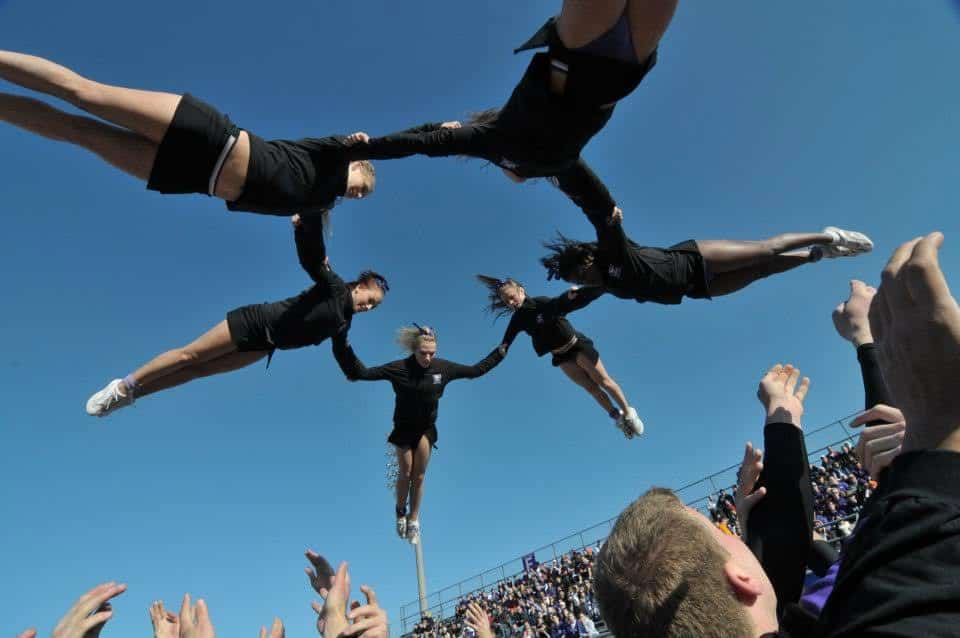
Long-time coach of champion Mustangs cheerleading squad sold you on the fact cheerleaders were great athletes. Passionate and entertaining. A big part of Mustangs sports history.
Brian Decker, Media
Man-bites-dog pick for honourable mention, but the most entertaining media member to have ever graced the local broadcast community. He was London’s original – and last – shock jock when covering sports for 1290 CJBK during the 1980s.
Doug Tarry, London Knights
I wrote a cover piece for Business London Magazine when Tarry owned and operated the OHL’s London Knights. After the team reached basement bottom with a 3-60-3 record during the 1995-96 season at the oddly named London Ice House (former London Gardens), that story headline read, The Most Hated Man In Hockey. Tarry, now a successful homebuilder, went bananas when that story ran. He was a great quote but often put his foot in his mouth with comments predicting his eventual success as a hockey executive. It never happened: he sold the team to the Hunter family in 2000 after a string of losing seasons and bad business decisions. The rest, as they say, is history.
Joe Smith, Sports Memorabilia Dealer
From the late-1970s throughout the 1980s, Joe Smith was the guy to see about buying and selling sports memorabilia. In particular, Smith was a baseball guy through-and-through. He had the gift of the gab – visit Smith at his central London home converted to retail space and count on being there for three hours talkin’ baseball.
Ed. Note: On The Record with Jeffrey Reed returns Saturday, July 11.
–30–
On The Record with Jeffrey Reed is published every Saturday at LondonOntarioSports.com. Multiple award-winning writer and broadcaster Jeffrey Reed is Southwestern Ontario’s senior sports journalist, with roots dating back to 1980. A three-time author, Reed penned, EBBA 40 Years of Baseball (1994) and, The Canadian Seniors’ Golf Association, Celebrating 100 Years of Seniors Golf 1918-2018 (2018). Reach him at jeff@londonontariosports.com.




Thank you Jeff for the stories over the years…My wonderful family and myself appreciate them…continued success to you and family and keep up the great work you do..
Sincerely,
Personal Regards,
Bob Martin and family