On The Record, with Jeffrey Reed
June 13, 2026
Tom Runnells: Salt Of The Earth At Labatt Park Circus
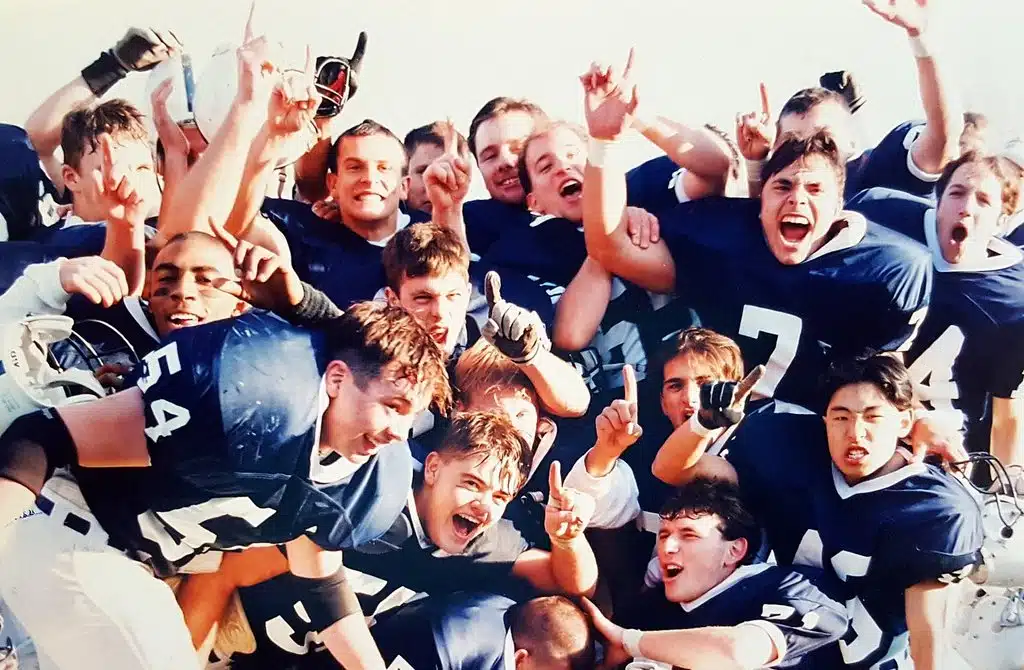
London Tigers 1993 team photo, by Jeffrey Reed/LondonOntarioSports.com

The 1988 movie, Bull Durham, was a masterpiece in defining minor professional baseball, and it’s one of the greatest sports movies of all-time. The movie’s writer and director, Ron Shelton, was himself a minor leaguer in the Baltimore Orioles organization, so it’s no surprise that film views like the quintessential documentary of life in the minors.
Anyone who was a regular around Labatt Park during the Class AA Eastern League London Tigers five-year run 1989-93 knows what I’m talking about. A roster full of 20-something ballplayers – most of them just a few years removed from living in their parents’ basements – meant womanizing and boozing at local bars. Testosterone-filled teammates would fight over women, too – don’t think those rivalries didn’t creep into the clubhouse and cause parking lot arguments. I once witnessed such a shouting and pushing match between two Texas Rangers players of note during spring training in the early-2000s. At Labatt Park in 1993, there were a lot of Baseball Annies frequenting the Forks of the Thames. We used to say, when the Tigers were in London for a homestand, the circus had come to town. And it certainly was a circus.
From 1991 to ’93, I was a constant working media member at London Tigers homestands and I rarely missed a game. I can still smell the hot dogs and pizza sitting in the press box for media, who never turn down free food – our wages will attest to that. Given the respect we scribes receive, I’m almost surprised they fed us. I can still hear the roar of the crowd, doing the wave. And the team’s official song, Tear ‘Em Up Tigers, still rings in my ears. Musician turned media member turned politician Jim Chapman wrote and performed that song. Jim worked briefly for the club and took a turn as PA announcer.

London Tigers versus Canton-Akron Indians at Labatt Park. Photo: Jeffrey Reed/LondonOntarioSports.com.
In addition to taping interviews with Tigers and visiting players and coaches for Rogers Television, and taking thousands of photos during batting practice, I wrote a popular weekly sports column for the now-defunct SCENE Magazine. At the time, it was the most read sports column in London. For a brief time, thanks to then editor Herman Goodden, me and a handful of other credible writers, SCENE was a highly-regarded local newspaper. It later became so bad, it made TMZ seem like the New York Times – Goodden, yours truly and a host of others left for greener pastures.
Also during my work at London Tigers games, I took headshots of promising players, including hometown pitcher Mike Lumley, for the Detroit Tigers media guides. Lumley did crack the big club’s 40-man roster during the 1992 off-season, pitched for Triple A Toledo Mud Hens but never made it to The Show. During his time with the Class AA club, he always seemed to have a chip on his shoulder – Lumley always seemed angry at the world. I witnessed his sparring matches with pitching coaches who were trying to offer instruction in the bullpen prior to BP: arguing with a coach is not going to get you to The Show, unless, of course, you are Ebby Calvin “Nuke” LaLoosh.
In 1990, the Tigers, under manager and former New York Yankees hero Chris Chambliss, captured the Eastern League championship. Chambliss, of course, hit a dramatic walk-off home run on October 14, 1976 to win Game 5 of the American League Championship Series for the Bronx Bombers. His pennant-clinching blast over the right-field wall off Kansas City Royals pitcher Mark Littell sent the Yankees to their first World Series in 12 years.

London Tigers manager Tom Runnells at Labatt Park. Photo: Jeffrey Reed/LondonOntarioSports.com.
Just as players frequently come and go at the AA level, so, too, do managers – as do franchise locations. In 1993, the Detroit Tigers selected former major league player and Montreal Expos manager (June 1991 to May 1992) Tom Runnells as their new London skipper. This would be the London Tigers’ last season as dwindling attendance forced a franchise move to Trenton, New Jersey where the Thunder played for one year. Runnells guided the Thunder to a 55-85 fifth-place finish.
True, AA ball is all about developing players for the big club, but winning is important, too – not only for team coffers but to instill in young players how to win ballgames while honing their skills in every aspect of the game. In ’93, Runnells managed the Tigers to a 63-75 record, good for sixth place but bad for attendance, which that year had dropped to just over 100,000 fans for the season. But not even a championship could have saved the London Tigers – London was not a good fit, as I will explain. Their rookie and sophomore seasons saw 168,000 butts in the seats each year. That number dropped to 150,000 in 1991, 113,000 in ’92 and even lower during their final season at Labatt Park.
I wrote back then, and I believe now, that London will not support a professional team that plays long homestands. A handful of Western Mustangs football games see very few Londoners, other than loyal alumni, at Alumni Stadium. The London Majors, formerly of the Intercounty Baseball League which has morphed into the so-called professional Canadian Baseball League – that’s a column for another time – have done well to boost their attendance at Labatt Park. But the Majors ballclub is far from professional, at its true definition. In fact, only the London Knights of the OHL are a big draw in Southwestern Ontario. Asking fans to attend games for the better part of two weeks each month was too much. I’ve attached a copy of the Tigers’ 93 schedule below this column.
Yet those five years of London Tigers baseball remain legendary, 33 years after the club packed its bags and headed off to Jersey. That ’93 season was one of my most enjoyable times spent covering local sports, and why not? I bleed baseball, so being able to exchange banter with developing big-leaguers and baseball folks like Runnells made it a pleasure to come to the ballpark for half the month. Note: I also attended every London Majors home game during that season, too, and in ’94 began taking on added responsibilities with the club, including play-by-player broadcaster for radio and TV, team photographer and media relations director. But in ’93, it was all about the Tigers.

18-year-old Manny Ramirez at Labatt Park with the Canton-Akron Indians. Photo: Jeffrey Reed/LondonOntarioSports.com.
One of the great things about hanging around the Eastern League batting cages was the opportunity to meet and take photos of can’t-miss prospects – there were plenty, but none bigger than Canton-Akron Indians sluggers Jim Thome and Manny Ramirez. Thome is now a Hall of Fame inductee, while Ramirez would be in the Hall if not for his use of PEDs. Take a look at the photo I took of Ramirez at Labatt Park and you’ll see what I mean. However, both Ramirez and Thome were very accommodating during their visits to Labatt Park.
Almost all of the Eastern League coaches and players were easy to get along with, but there were exceptions. The Albany Yankees were always standoffish and arrogant. They were, after all, the Yankees. But the worst was a smartass by the name of Mike DeButch, a 5’10” 165-lb. career minor-league infielder from 1984 to ’92 who made it to Triple A but then finished his career with the London Tigers. For whatever reason, DeButch decided to bully me at the ballpark every opportunity he had – I did not know the guy, and he didn’t know me. There were times when I was taping an interview for Rogers TV, only to have him stick his face into the shot, or start yelling schoolboy-type insults at me after the shoot. I didn’t see any of his teammates laughing at his insults – that says a lot. Every team, I suppose, has at least one asshole. DeButch became an athletics superintendent in Chicago – and I am sure he is a nicer person today, or am I? We do tend to get nicer as we age – but some of us became grumpy, aging sportswriters.

Tom Runnells welcomed to London 1993. Photo: Jeffrey Reed/LondonOntarioSports.com.
For me, the highlight of that ’93 London Tigers season was befriending Runnells. That spring, I was on assignment for The London Free Press and welcomed Runnells to London at what is now the Delta Hotels London Armouries. I needed a headshot of Runnells to run on the cover of the paper, introducing my story, and I got it – but Runnells, with a three-day growth, complained that he didn’t shave and didn’t know I would be taking his photo. I guess in 1993, the three-day scruff was not an in thing like it is today. Anyhow, I took the photo after we enjoyed coffee and lunch. You can read that story, which recaps his career up until he was named London Tigers manager, below:

After managing in Trenton in ’94, Runnells was bench boss with Triple A Toledo Mud Hens 1995-96, with Colorado Rockies Class AA Texas League Tulsa Drillers 2004-05, and with Rockies’ Triple A Pacific Coast League Colorado Springs Sky Sox 2006-2009 – replaced by Stu Cole in late-May ’09 when he was promoted to Rockies bench coach (replacing Jim Tracy who was named manager). Runnells held that post until his retirement in 2016.
In between, Runnells was the Tigers’ advance scout 1997-98 and minor league hitting instructor 1999-2003.
Back to the ’93 London Tigers. Sportswriters and ballclubs will inevitably clash. I had my run-in with Tigers brass after writing a column about the ballclub’s plans – confirmed by necessary sources and contacts – to sell the team, which would move to Trenton. Entering the gates to Labatt Park after my column was published, team VP and GM Bob Gilson met me with, shall we say, less than a handshake. He was furious, and said he wanted to sue me for writing my article. Gilson was passionate about baseball – some would say too passionate and emotional. Sadly, he died of cancer in April 2015.

London Tigers manager Tom Runnells (left) with Tigers coach Dan Raley, showing off his baseball skills. Photo: Jeffrey Reed/LondonOntarioSports.com.
Gilson, along with Dan Ross, Bill Wilkinson, Mike Tucker and Brian Costello were principal team owners. As I unloaded my notepad, scorebook and camera gear, preparing for my day at the ballpark, Ross sat down beside me in the press box where we had a very cordial chat about my column and the team’s move. He voiced his disappointment in how my column read – said the Tigers thought I was one of them, I suppose stemming from the fact I tirelessly supported the ballclub through my print and broadcast work – and our chat was a good one. I always thought Gilson and Ross played bad cop-good cop. In the end, Ross and I shook hands, Gilson and I spoke on friendly terms and I appreciated that. I truly believe they realized I was only doing my job. Gilson was just too close to the project, hence his fury. But it all worked out in the end – the club even invited me to take a team photo. I later presented the club with an enlarged photo I took of a team hat, bat, glove and ball. Gilson was quite moved by the gesture. You see? Sports writers aren’t always assholes.
When the team played its final home game, Gilson sat, alone, in the bleachers, weeping. He lived and breathed London Tigers.
A number of those ’93 Tigers went on to play in the big leagues – infielder Shannon Penn, outfielders Danny Bautista, Bobby Higginson and Rudy Pemberton, and pitchers Brian Edmondson, Mike Garcia, Rick Greene, José Lima, Felipe Lira, Phil Stidham and Justin Thompson all saw their MLB dreams come true.

Tom Runnells today
One of the many things I appreciated about Runnells was his complete honesty. I asked him once about the Labatt Park diamond, which was labelled by the suits at City Hall as “the best baseball field in all of Canada.” I coached and pitched for the London Majors, and I can call bullshit on that claim. It certainly looked pristine, and was carefully manicured by City crews and by the Tigers during their five-year run. But Runnells hated the turtleback design which saw the infield slope towards the outfield at its outer edge, in order to provide – as designed – good drainage in its floodplain setting. In fact, I have seen many infielders, at many levels, trip on their own feet as they’ve attempted to field ground balls and fly balls. This was Runnells’ assessment, and he was right – and right to point it out to me when asked. Good on him.
In 1993, London really was a pro sports town. I recall watching some of the ’93 du Maurier Ltd. Classic at London Hunt and Country Club with Runnells and his London Tigers pitching coach, former big leaguer Sid Monge, who was a huge fan of Dottie Pepper, the golfer turned on-course analyst. The duo followed Pepper from the gallery – she finished fourth that week. Like Runnells, Monge was very approachable, cerebral and a great conversationalist. I enjoyed our talks during Tigers batting practice, and enjoyed listening to him as he instructed his young hurlers before BP – it always paid off, getting to the ballpark early in the afternoon. In fact, from a very early age, Labatt Park was always my second home. That was certainly the case during the summer of ’93.

Ty Cobb art piece by Tom Runnells
Runnells now lives in Toledo, Ohio with his wife, Chrys. When he’s not coaching or offering tips to young ballplayers, Runnells uses his artistic talents and deep love of baseball and baseball history to operate, Art Of Baseball – a home-based studio where he turns old baseballs into art work honouring the game’s past and present legends. Repurposing used balls provided by his former teams, Runnells incorporates portraits by artist Jeff Stone to create one-of-a-kind design pieces with stitching and leather. He donates the proceeds from selling his artwork to youth-serving charities. His website art-of-baseball.com showcases some of his work.
Work the beat as a sports journalist for almost 50 years, and you’re going to meet all kinds of people from all walks of life. One thing I can say about Tom Runnells is, he is the salt of the earth. Very few managers or coaches showed me the respect Runnells did, and I have missed our endless long chats about baseball, golf and life. I hope we meet again someday to talk about golf, baseball and the ’93 Tigers. I’d also love to hear his stories about being a teammate of Pete Rose with the Reds.
Indeed, Runnells was a tough-guy, father, mother, teacher, best friend and financial advisor, all rolled into one – and, for my money, the smartest baseball mind to ever grace historic Labatt Park. London was lucky to have him – even if for only one year.
But what a year it was.
After the ’93 season, I went on to write my first book, EBBA 40 Years of Baseball, recounting London baseball history and the founding of the Eager Beaver Baseball Association, London’s first minor sports association and one of Canada’s first Little League groups. The book was the very first local baseball history book ever published, and I’m extremely proud of that. Later, I would cover Major League Baseball in Toronto, Pittsburgh and Detroit, and during the Grapefruit League. But no season was as enjoyable as that ’93 campaign.

London Tigers manager Tom Runnells. Photo: Jeffrey Reed/LondonOntarioSports.com.
One more story to share: in 2012, the London Public Library held a showing of, Bull Durham, and invited me and former London Free Press sports editor David Langford to sit on a panel, analyzing the significance of that film. I pointed out the scene when Crash Davis, the veteran minor-league catcher played by Kevin Costner, was informed by the Bulls’ manager that he was added to the Class A Carolina League ballclub to babysit “Nuke.” Davis thought it over, said, “Fuck this fucking game,” then walked out of the skipper’s office. The manager and coach just sat their, without a word, knowing that baseball was in Davis’s blood and that he would be back. After thinking about quitting, Davis returned to the office in a few seconds, and asked what time batting practice was – classic scene.
Runnells never had to face that scenario. He was a very well-respected baseball mind. The Expos experience was just a blip on the Runnells radar – he should have been left to manage and would have done a great job. But when he retired, he did so on his own terms – and is even more respected today than during his managing days. That, too, speaks volumes about the man.
After all, we’re not remembered by wins and losses, but by what we stand for. And that is why Runnells will always be my favourite baseball interview during my long career.
–30–
On The Record is published every Saturday at LondonOntarioSports.com. Multiple award-winning writer and broadcaster Jeffrey Reed is Southwestern Ontario’s senior sports journalist, with roots dating back to 1980. A three-time author, Reed penned, EBBA 40 Years of Baseball (1994) and, The Canadian Seniors’ Golf Association, Celebrating 100 Years of Seniors Golf 1918-2018 (2018). Reach him at jeff@londonontariosports.com.
Bonus photos: more from the London Tigers and Labatt Park, by Jeffrey Reed/LondonOntarioSports.com

London Tigers 1993 pocket schedule – still selling on eBay.

Sunday morning chapel with the London Tigers at Labatt Park. Photo: Jeffrey Reed/LondonOntarioSports.com.

Right out of Bull Durham: a wedding ceremony at Labatt Park’s home plate prior to London Tigers game. Photo: Jeffrey Reed/LondonOntarioSports.com.

Hometown hero Mike Lumley signs autographs at Labatt Park on Canada Day. Photo: Jeffrey Reed/LondonOntarioSports.com.