

Reed On The Greens
March 31, 2015
by Jeffrey Reed, Editor, LondonOntarioGolf.com
Tumultuous 1968 was perhaps the most historic year in U.S. history. It was a year of unrest. Bobby Kennedy and Martin Luther King were assassinated. The Vietnam War escalated. Apollo 8 saw the first manned spacecraft orbit the moon. And U.S. athletes took a stand at the Summer Olympics in Mexico City to demonstrate against racial discrimination.
Of course, those are just a few of the monumental dates in history from 1968. One thing is for certain: it was a year of unprecedented change in U.S. history. But we saw first-hand how a city like Detroit, hammered by violence one year before, rebounded through the spirit of sports when the Tigers won the World Series.
London, too, was a much different city 47 years ago. The City of London municipal golf system was a much smaller operation, but still the major player in local golf for the public player. And it was in 1968 that the City hired a 15-year-old golf enthusiast – a member of the Junior Tyson Tour, also formed that year – to work in the back shop where he cleaned clubs, and in the pro shop to take cash from the daily green fee golfers.

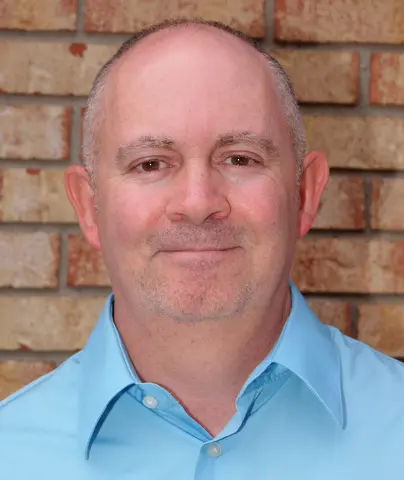
John Cowie retired yesterday from a job he put his blood, sweat and tears into for parts of seven decades. The muni system’s supervisor of golf operations since 1993, Cowie, 61, also saw a stint as head greenskeeper at all three of the City’s golf clubs. He was instrumental in the design and installation of automatic irrigation systems and auto water pump stations at Thames Valley, Fanshawe and River Road. And he assisted long-time Fanshawe GC head professional Mike Olizarevitch in designing the final nine holes at the club’s Quarry course, and its Parkside Nine layout.
“I think it’s neat that I started with the City courses the same year as the Tyson Tour started,” said Cowie, who won the tour title in 1969. “When the City hired me to work as a temporary employee for 10 seasons, they were doing me a favour. It was a labour of love.”
Cowie said the same thing about penning his 2010 book, From Rough To Fairway: The First 85 Years of the City of London Golf Courses. He said he invested $8,000 into publishing the 104-page book bursting with historically-significant photographs and renderings which beautifully illustrate the City-owned courses.
Olizarevitch once told me, “You work for close to 50 years in the golf industry and it gets in your blood.” The same holds true for Cowie, whose three-month stay this season before his retirement marked his 48th consecutive year with the City courses. He’s not hanging up his hat just yet, as he’ll work part-time at Fairway Golf Practice Facility on Fanshawe Park Road, play “a lot more golf now that I’m retired,” and compete again – something he said he hasn’t done since playing in the 1981 Canadian Amateur championship in Calgary. Canadian golf legend Richard Zokol won that year.
Cowie has always been detail-oriented in his approach to the golf industry. In fact, prior to an interview with him just before he punched the clock for the last time, Cowie submitted a two-page question and answer form, detailing some of his accomplishments and thoughts related to his tenure with the City. (He asked to see a copy of this story, too, before it was published. We nixed that, of course, but gave him an A for effort).
And that’s just how Cowie approached his job with the trio of City golf operations: he left nothing to chance. Like yours truly, Cowie played junior golf at Fanshawe in the city’s northeast corner – an area exploding with new homes.
While Thames Valley remains the anchor of the course trio, Cowie sees great things ahead for both Fanshawe, and the system’s weakest link, River Road.
“The geographic locations of the City courses are strong,” said Cowie. “Thames Valley is always a money maker. But the growth towards Fanshawe Park Road and along Veterans Memorial Parkway is huge, and in time both Fanshawe and River Road courses will see a much brighter future.”
Cowie said with three key inner-city locations, “We’re the major player within city limits.” He always speaks of the muni system as “we” – a testament to how his own career has intertwined with the system’s growth.
Thames Valley opened in 1924 as one of Eastern Canada’s first public courses. It expanded to 18 holes in 1927, and also includes the par-32 Hickory course. There have been 11 major renovations to the track, considered one of Canada’s top muni layouts. Fanshawe was constructed in 1958, and saw expansion in 1983 and 1998. Today, it includes the Traditional and Quarry 18-hole courses, plus the Parkside Nine, North America’s first golf course designed for special needs golfers. River Road joined the mix in 1993.
River Road and Fanshawe ran small deficits in 2014, while (as expected) Thames Valley did produce revenue last season. London director of parks and recreation, Bill Coxhead, reported to city council’s community and protective services committee that overall, the muni golf system had a $59,000 surplus in ’14. That surplus is now part of a $275,000 capital reserve fund (CRF) – about $100,000 of the CRF is used each year to renovate the trio of courses.
Coxhead reported, Ontario courses saw an overall decrease of 5% in rounds played last season. With its rebound, the local muni system has hired additional golf pros, improved customer service and offered lower green fees at River Road and Fanshawe.
“We have the quirkiness of being part of a political battle all the time,” said Cowie. “But the City golf courses are one of the best things about London. It has to be among the Top 10. And it’s amazing, when it feels pressure as it does from time to time, all of a sudden people come out of the woodwork to defend it like crazy.”
“The future looks bright for the City courses. The layouts are great, the infrastructure is good,” added Cowie. “Having two courses at Fanshawe is a real advantage.”
In his book, Cowie wrote: “What makes the City of London courses unique is the way the system was built with no public investment of any kind. The fees of the golfers and the determination, resourcefulness and vision of the people who worked on them are all that allowed them to be successful.
“There never was a master plan for the golf courses,” wrote Cowie. “Design of all the holes on the course was done by city staff who did the layout work as part of their regular duties. They weren’t exactly rookies in the golf business but neither were they professional golf course architects.” He wrote, “The city golf course system is an in-house project.”
From Rough To Fairway is available at the Thames Valley pro shop for $19.24 – reflecting the club’s first year of operation.
With London and area grossly overpopulated with golf courses, and concurrently many struggling to survive (Dorchester GC and The Fox GC are both for sale), Cowie said “deep pockets and a love of the game” are the two reasons why most course owners are involved with the industry. And he said he’s proud of how the City courses helped generate the interest in the game among public players.
“We have a lot of history in the city – think of (1932 U.S. Amateur champion) Sandy Somerville and London Hunt and Country Club. But I have always thought that the City courses were the biggest reason for London’s interest in golf.”
You can take Cowie away from his job with the muni golf system, but you can’t take golf away from him. It’s a common thread shared by those who love the game. And few City golf staff members have meant as much to the system as has Cowie.


